

What Happens If Your Cruise Ship Returns Late? How to Plan Your Post-Cruise Transfer
Planning a post-cruise transfer is the part of the trip most passengers leave to chance. You booked a cabin months ago, packed your bags the night before disembarkation, and arranged ground transportation for your return. But cruise ships do not always dock on schedule, and when yours runs late, a transfer you assumed was locked in can unravel fast. Understanding what to do when your cruise ship returns late, and how to plan transportation around that uncertainty, is one of the most practical things you can do before you ever set sail.

Why Cruise Ships Return Late More Often Than You Think
If you have ever stood on a balcony watching port lights in the distance, willing the ship to move faster, you are not alone. Cruise ship delays are surprisingly common, and they are rarely announced until the vessel is already behind schedule.
Common Causes of Cruise Ship Delays
Several factors can push a ship past its scheduled return time. Rough seas and weather systems are the most frequent culprits, as captains often slow the vessel to ensure passenger safety. Port congestion at earlier destinations in the itinerary can create a domino effect that carries through the entire voyage. Technical maintenance, medical emergencies requiring coast guard coordination, and customs or immigration processing backlogs at the home port can also delay docking by anywhere from 30 minutes to several hours.
How Cruise Lines Communicate Delays to Passengers
The cruise line will typically announce delays through the ship's onboard PA system and digital displays. However, family members or transfer services waiting ashore often have no official channel to receive real-time updates. This is a critical gap. Your transfer provider onshore may not know the ship is running two hours behind until they arrive at the terminal and find an empty berth.
What Happens to Your Transfer When the Ship Is Late?
This is where post-cruise transportation plans fall apart. The transfer you arranged worked perfectly for an on-time arrival. A two-hour delay changes the math entirely.
Rideshare and Taxi Risks at the Port During Delays
If you were counting on ordering an Uber or Lyft when you stepped off the gangway, a delay puts you in a difficult position. Surge pricing near busy cruise terminals during disembarkation windows is common. Add several hundred passengers all requesting rides at the same time after a delayed docking, and prices can spike significantly. Taxis at the port operate on fixed meters, but availability is not guaranteed during surge periods. With luggage in hand and a possible connecting flight to make, the dockside scramble is the last thing you want.
How Professional Transfer Services Handle Late Arrivals
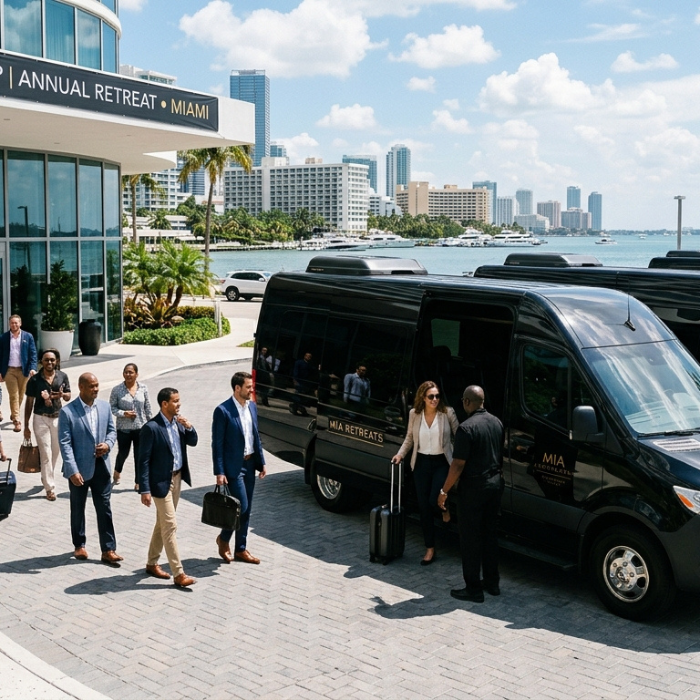
A reputable Miami cruise port transportation provider monitors ship arrival times proactively. At Shuttle Express Miami, we track the vessel and adjust pickup timing accordingly, so you are not stranded at the terminal and we are not idling for hours on a fixed schedule. The key difference between a professional transfer and a rideshare is accountability: your driver knows your ship name, your arrival terminal, and how to reach you if the situation changes.
The Difference Between a Pre-Booked Shuttle and Scrambling Dockside
Passengers who pre-book a dedicated transfer arrive at the terminal with one less problem to solve. Their driver has their contact information, the booking is tied to the ship's actual arrival, and the communication channel is already open. Passengers relying on last-minute options are making decisions in a stressful environment, often with heavy luggage, variable cell service near the water, and a countdown to a departing flight.
How to Plan a Post-Cruise Transfer That Accounts for Delays
The goal is not to predict exactly when your ship will dock. The goal is to book transportation that is flexible enough to absorb the unexpected without leaving you stranded.
Choose a Private or Flexible Transfer Over a Shared Shuttle With a Hard Cutoff
Shared shuttles operate on schedules. If your ship docks 90 minutes late and the shared shuttle departs at a fixed time, you may miss your ride. A private shuttle from Port of Miami is dedicated to your group and departs when you are ready, not when the van is full. For families or groups of four or more travelers, private transfers are often comparable in cost to shared options once you account for multiple rideshare fares, and the flexibility is vastly superior.
Build Buffer Time Into Your Post-Cruise Day
If you have a flight booked for the afternoon of disembarkation, add at least three to four hours of buffer beyond the scheduled port arrival time. Most travel experts recommend a minimum two-hour buffer for domestic flights and three hours for international departures. A late ship plus a long customs line plus post-cruise traffic can eliminate a thin margin very quickly.
Communicate Your Cruise Line and Ship Name When Booking
When you arrange your transfer, provide the cruise line name, ship name, and scheduled arrival time. A professional transfer company will use this information to track the vessel and adjust accordingly. This simple step is one of the most effective ways to protect yourself against delay disruptions.
Questions to Ask Your Transfer Provider Before You Sail
- Do you monitor ship arrival times in real time?
- What is your policy if the ship arrives more than one hour late?
- Is there an additional charge for extended wait times?
- How will you contact me when I disembark?
- Do you serve both Port of Miami and Port Everglades?
If a provider cannot answer these questions clearly, keep looking. The answers reveal whether you are booking a service or just a car.
Port of Miami vs. Port Everglades: Does the Port Affect Your Delay Risk?
Both ports handle significant cruise traffic, but they operate differently and sit in different locations.
Port of Miami is located downtown, directly connected to I-395, and closer to Miami International Airport (MIA). Port Everglades is in Fort Lauderdale, approximately 30 miles north, and serves passengers flying through FLL. It is the busier of the two in terms of passenger volume on peak embarkation days.
Delays at Port Everglades can be compounded by the volume of simultaneous disembarkations, particularly on Sundays when multiple ships return at once. At Port of Miami, downtown traffic on a weekend morning can add meaningful time to any ground transfer. Either way, airport and cruise transfers Miami travelers rely on should be booked with a provider that covers both terminals and adjusts to whichever port your ship calls home.
"At Port Everglades on a Sunday, multiple ships can disembark thousands of passengers simultaneously. Booking your transfer in advance, and choosing a provider who monitors arrivals, is the difference between a smooth exit and a chaotic one."
Key Takeaways
- Cruise ship delays are common. Weather, port congestion, and technical issues can push your return time back by hours with little warning.
- Rideshare options surge. Pricing near cruise terminals spikes when hundreds of passengers request rides at the same moment after a delayed docking.
- Private transfers offer flexibility. A dedicated transfer is not locked to a fixed departure window, so a late ship does not leave you stranded.
- Share your ship details when booking. Providing the cruise line name, ship name, and scheduled arrival time allows your provider to monitor and adjust.
- Buffer time protects your flight. Build at least three to four hours between scheduled port arrival and your departure, especially for domestic flights.
- Ask the right questions before you sail. A professional transfer provider should have clear policies for delays before you hand over a credit card.
Plan Your Post-Cruise Transfer Before You Sail, Not After You Dock
A late cruise ship return does not have to mean a chaotic transfer day. The passengers who arrive home relaxed and on schedule are the ones who planned their post-cruise transfer with flexibility in mind, not just price. They chose a provider who tracks ship arrivals, offers dedicated vehicles for their group, and communicates proactively when plans shift. That is what separates a smooth disembarkation from a stressful one.
At Shuttle Express Miami, we specialize in cruise port transfers from Port of Miami and Port Everglades and monitor vessel arrivals so your driver is ready when you are, not before. If you are planning a cruise out of South Florida, book your transfer before you set sail and travel with one less thing to worry about.
Recent Posts